GR Series — Cloud-Controlled Relay Controller
Smart Cloud-Controlled Curing Equipment
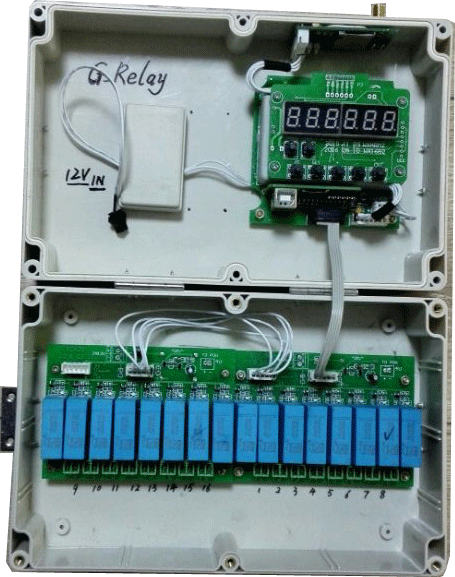
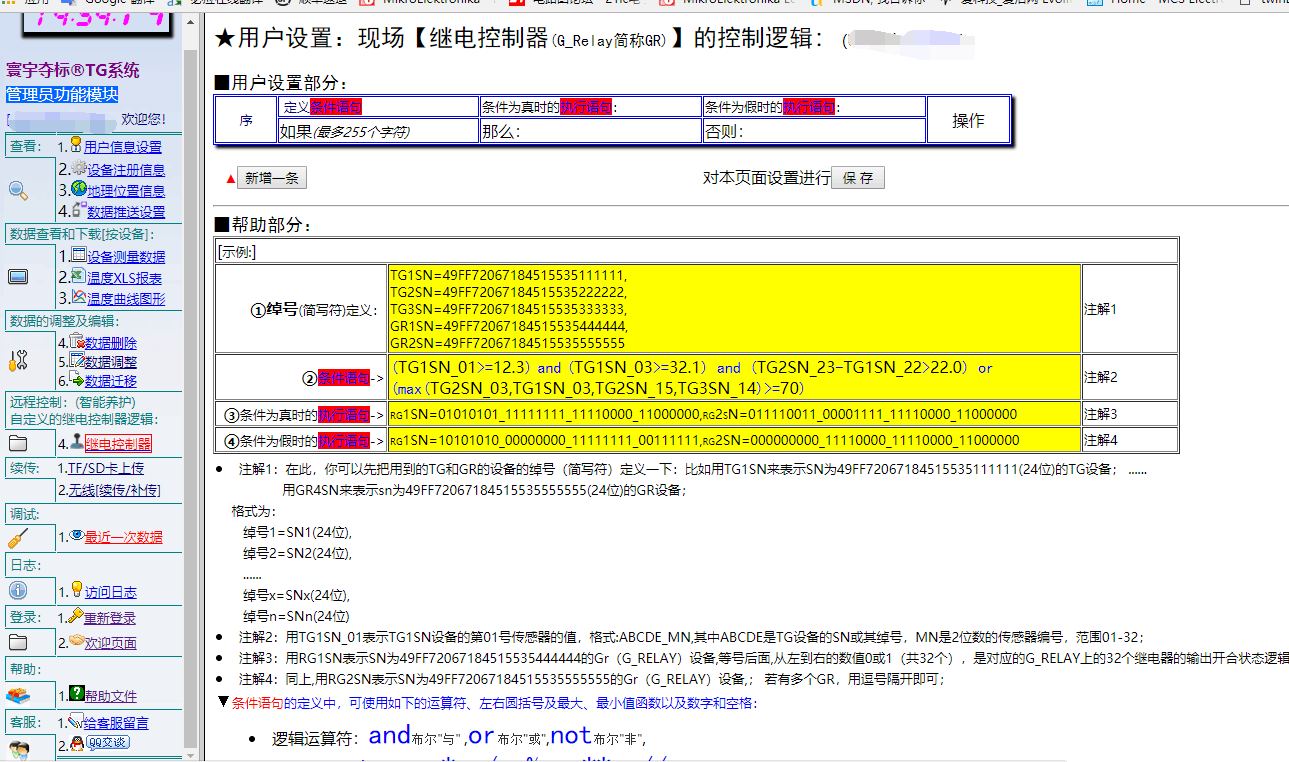
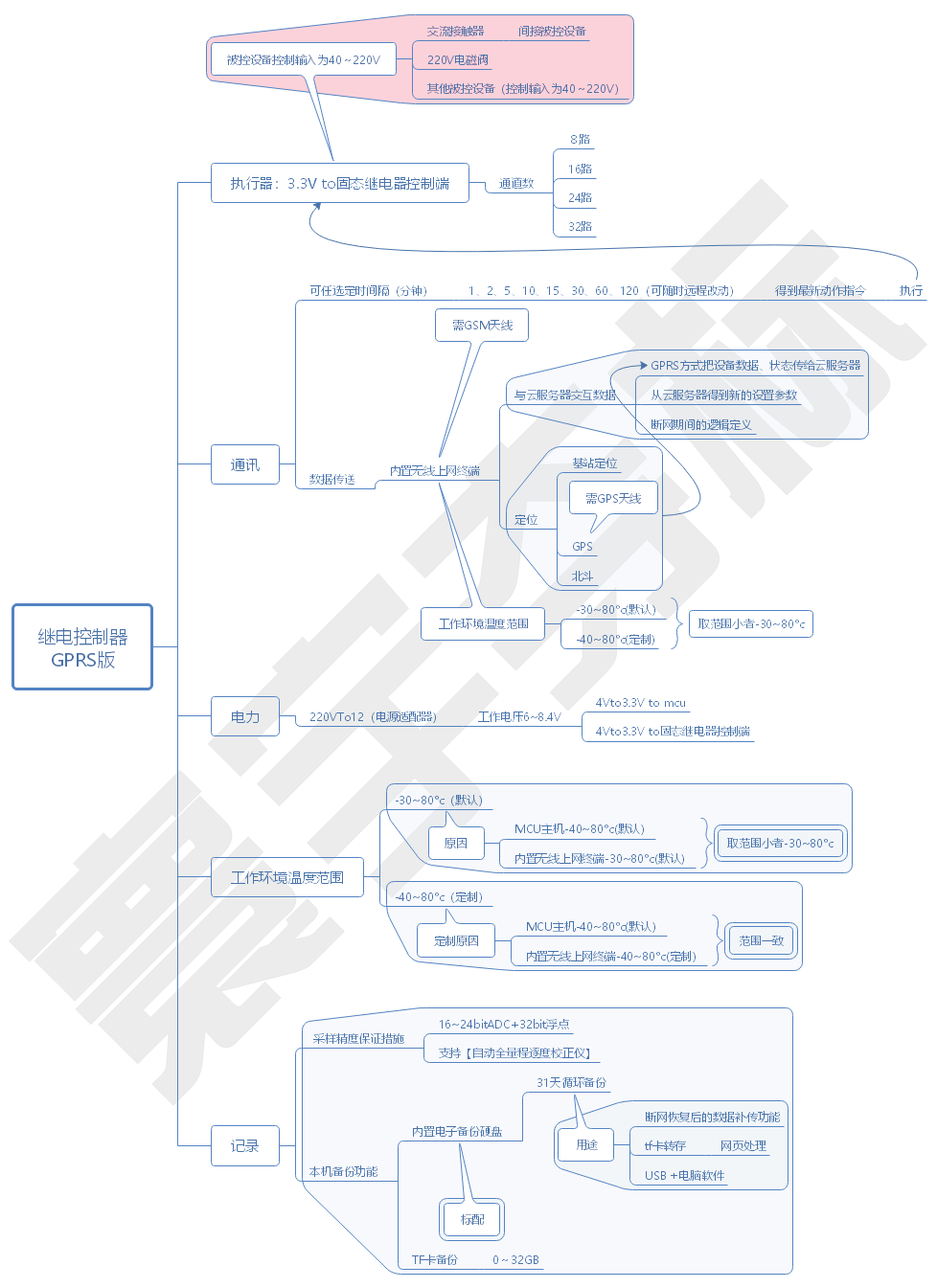
The GR series cloud-controlled relay controller is an actuator device that defines logic based on real-time temperature data to control relay outputs, thereby controlling water solenoid valves, steam valves, electric blankets, and other on-site switch-type curing equipment. Control logic is defined on the cloud web interface; driving data can be temperature, humidity, or other sensor data. Connects directly to cloud servers via 4G — no distance limitation. Uses solid-state relays with no mechanical contacts. Available in 8/16/24/32 channels.
Key Features
- Define logic on real-time temperature data to control relay outputs
- Control water solenoid valves, steam valves, electric blankets, and other curing equipment
- Control logic defined on cloud web interface; driving data supports temperature and humidity
- GPRS connectivity — no distance limitation
- Solid-state relays — no mechanical contacts, suitable for frequent switching
- 8/16/24/32 channel options
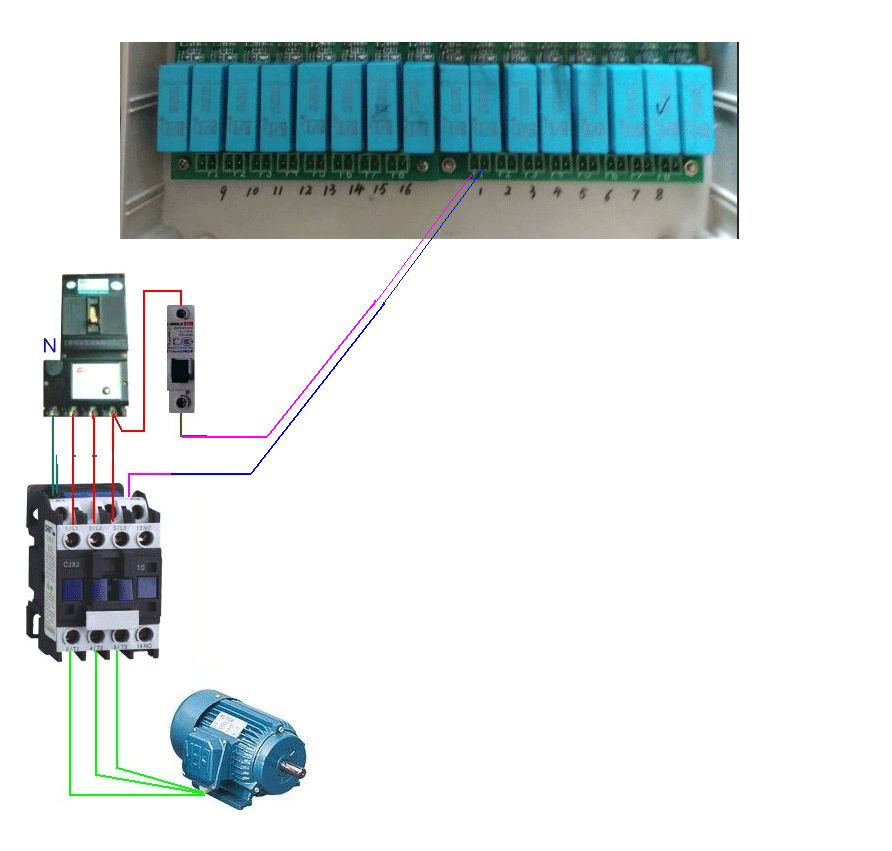
- Direct control of loads up to 220V 3A; add AC contactor for larger loads
- Effectively resistant to on-site high-current interference such as welding
FAQ
What role does the GR relay controller play in the monitoring system?
The GR relay controller is the actuator unit of the monitoring system. It automatically controls external devices (cooling pumps, heaters, alarms, etc.) based on temperature thresholds set on the TG host. When temperature limits are exceeded, it automatically starts/stops equipment — no manual intervention needed.
How many relay outputs does the GR controller support?
The GR relay controller provides 16 independent relay outputs, each with 10A/250VAC contact capacity. Each output can control a separate switch-type device or different actions of the same device. Control logic and temperature thresholds are independently configurable per output.
How do I configure the GR control logic?
Control logic is set via the TG host or cloud platform: ① Set temperature upper/lower thresholds; ② Choose control mode (start above upper / start below lower); ③ Set delay parameters to prevent frequent cycling. Once configured, the GR operates automatically.
Does the GR controller support manual control?
Yes. The GR controller panel has a manual/auto switch. In manual mode, relay outputs can be controlled directly via panel buttons. Remote manual control is also supported via the cloud platform for emergency operations.
What is the wiring method for the GR controller?
The GR communicates with the TG host via RS485 bus. Relay output terminals connect directly to external device control circuits (pumps, fans, etc.). Terminals are pluggable for easy installation and maintenance. Note the relay output rated capacity (10A/250VAC).
Does the GR controller need separate power?
Yes, the GR controller is powered by 220V AC. This independent power design ensures stability since relay-controlled external devices draw significant current.
Is the GR relay contact capacity sufficient?
Each GR relay output is rated 10A/250VAC, sufficient for most pumps, fans, and alarms directly. For higher-power devices, an external AC contactor can be used for capacity expansion. We provide contactor selection guidance.
Will the GR control logic be lost after power failure?
No. The GR controller has non-volatile memory that retains all control logic and threshold parameters through power failures. After power restoration, it automatically resumes the pre-failure state. A power loss alarm notification is also triggered.
How is the GR controller installed?
The GR controller is wall-mounted, suitable for installation in electrical boxes. Compact size (~100×80×60mm). Pluggable terminals for easy wiring and maintenance. Recommended for installation in a waterproof box (IP54).
Interested in this product?
Contact us for detailed specifications, pricing, and technical support.
Contact Us