DG Series — Dual-Wireless Universal Measurement & Control System
Dual-Wireless Universal Measurement & Control System
The DG device is a bidirectional data adapter deployed on site, serving as the bridge between the cloud server and various on-site measurement and control devices. Typically only one DG unit is needed per construction site, capable of connecting 120+ sensors and control devices. It supports thermometers, flow meters, VFDs, relay controllers, solenoid valves, electric curing equipment, alarm devices, and more. All device data is aggregated to the cloud for unified management, with support for custom logic operations to control output devices. Both wireless and wired on-site connections are supported.
Key Features
- Dual-wireless universal measurement and control system with cloud platform support
- Each device wirelessly connects 120+ sensors and control devices
- Supports multiple device types: thermometers, flow meters, VFDs, relays, solenoid valves, electric curing equipment, alarm devices, etc.
- All device data aggregated to cloud for unified management
- Custom logic operations for output device control
- Supports wired or wireless on-site connections
- Multiple DG units can work collaboratively
FAQ
What role does the DG bidirectional data adapter play in the monitoring system?
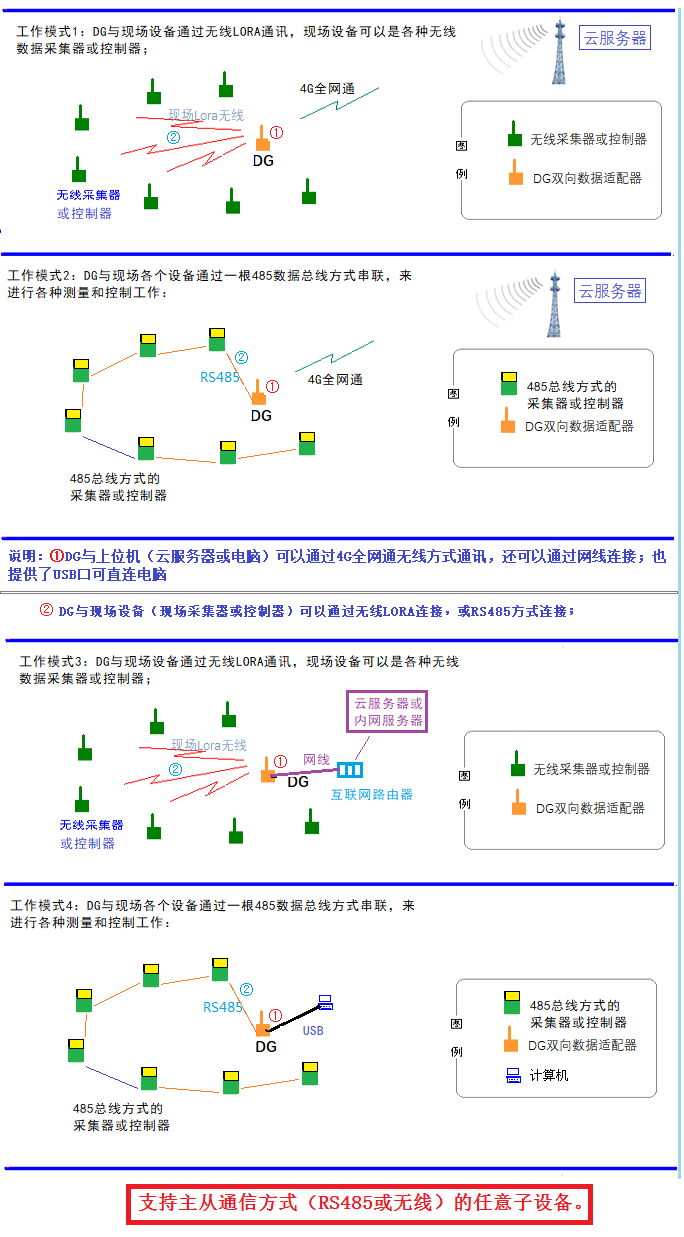
The DG bidirectional data adapter is the core communication hub bridging cloud servers and on-site monitoring/control equipment. It collects data such as temperature, humidity, flow, frequency, water level, water pressure, and relay status via RS485 or LoRa, and securely uploads to the cloud platform or private deployment environment via 4G (Wi-Fi/RJ45 compatible); it also relays cloud control commands downstream. A single DG can efficiently manage up to 120 nodes (collectors and controllers), supporting hybrid wired/wireless networking that significantly reduces on-site cabling costs.
Note: The TG series is a dedicated cloud temperature monitoring terminal, forming a heterogeneous system with the DG adapter at the platform level, with full data interoperability. The platform can fuse TG temperature data with DG sub-device operating parameters for comprehensive computation, and issue control commands via DG. Example: When the cooling rate of the concrete core temperature in a given zone drops below 2°C/day, the platform automatically sends a command to reduce the circulating pump VFD frequency to 80% of its current value.
Note: The TG series is a dedicated cloud temperature monitoring terminal, forming a heterogeneous system with the DG adapter at the platform level, with full data interoperability. The platform can fuse TG temperature data with DG sub-device operating parameters for comprehensive computation, and issue control commands via DG. Example: When the cooling rate of the concrete core temperature in a given zone drops below 2°C/day, the platform automatically sends a command to reduce the circulating pump VFD frequency to 80% of its current value.
How many nodes can a single DG adapter manage?
A single DG bidirectional data adapter can manage up to 120 nodes (including collectors and controllers), supporting hybrid RS485 wired and LoRa wireless access. For larger deployments, multiple DG units can be flexibly scaled under a single platform account to meet the demands of large-scale temperature monitoring and automatic temperature control projects.
What is the field-side wireless transmission range of the DG bidirectional data adapter?
The DG uses RS485 bus and 433MHz spread-spectrum communication. RS485 offers a theoretical range of up to 1200 meters, while wireless line-of-sight coverage exceeds 500 meters. In complex obstructed environments, adding a repeater every 200–300 meters is recommended, achieving an effective coverage radius of 1+ km through 4 routing hops. In practice, RS485 is the preferred choice for connecting DG to on-site equipment due to its strong noise immunity — particularly suited to centralized control deployments, where it significantly reduces wiring complexity.
How is the DG bidirectional data adapter powered?
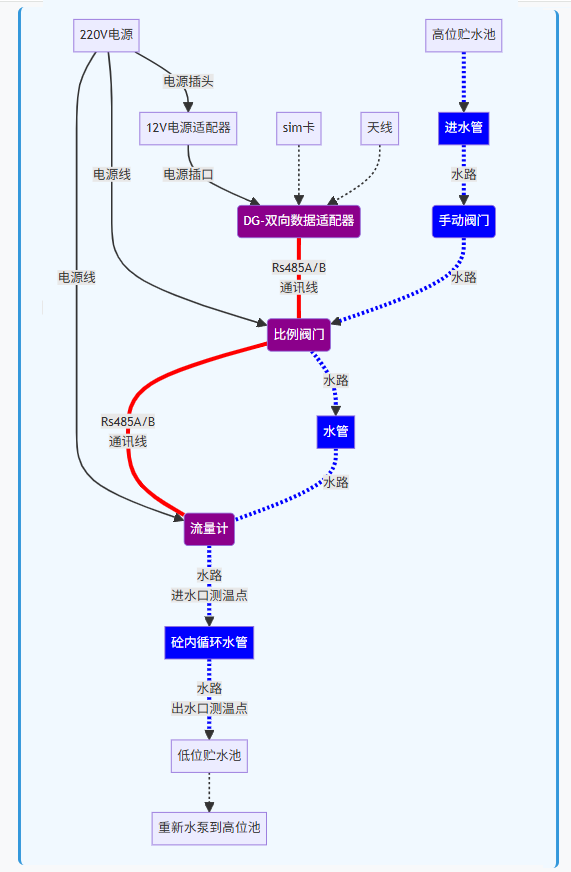
The DG adapter is powered by a 220V-to-12V power adapter, enabling 24/7 uninterrupted operation via on-site mains power. Since field controllers also run on 220V, the DG stays online in sync with the control loop, ensuring real-time receipt of cloud commands and millisecond-level relay to actuators for responsive regulation.
How is the DG bidirectional data adapter installed and configured?
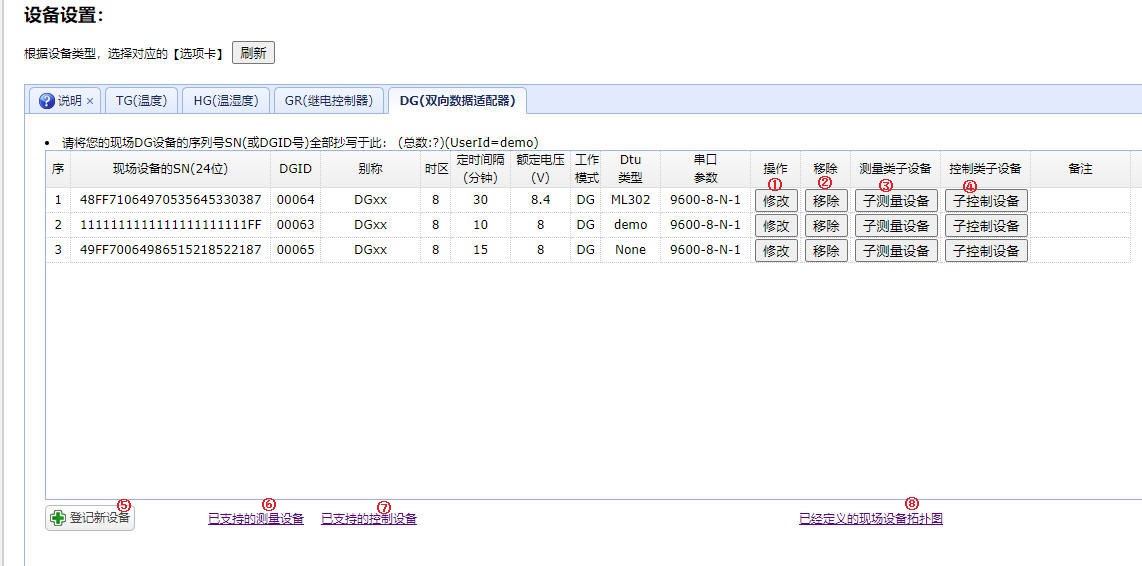
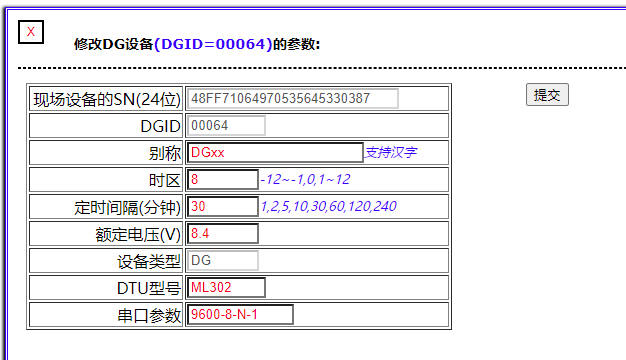
The DG adapter is wall-mounted, compact in size, and can be fixed to site columns, walls, or electrical boxes. Configuration is done via the cloud platform web interface to set device address, collection interval, etc. Simple operation, no specialist needed.
If the cloud platform needs to control on-site sub-control equipment via DG, it typically requires combining temperature data from TG and other systems with DG-collected data such as flow, current VFD frequency, solenoid valve status, etc. to compute and generate control commands. Our technical staff will handle this — you only need to provide clear requirements.
If the cloud platform needs to control on-site sub-control equipment via DG, it typically requires combining temperature data from TG and other systems with DG-collected data such as flow, current VFD frequency, solenoid valve status, etc. to compute and generate control commands. Our technical staff will handle this — you only need to provide clear requirements.
Is the communication between DG and RF stable?
Yes. DG and RF use 433MHz spread-spectrum communication with strong anti-interference and good penetration — ideal for construction sites. The system features automatic retransmission with extremely low packet loss. Auto frequency hopping avoids co-channel interference. In extreme harsh environments, a single RS485 bus wired connection can be used instead;
Does the DG support firmware upgrades?
Yes. The DG adapter can be firmware-upgraded via USB connection to a PC. We periodically release firmware updates to optimize performance and add features. The upgrade process is simple, typically completed within 5 minutes.
How does the DG connect to on-site sub-measurement and sub-control devices?
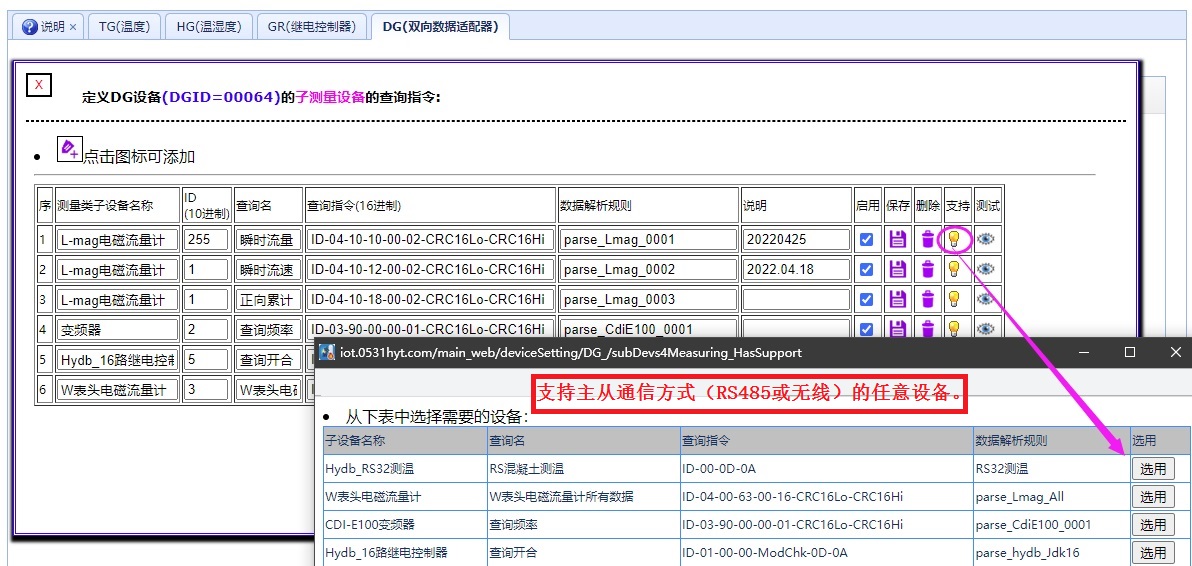
On-site sub-measurement devices connected to DG include: electromagnetic flow meters (measuring instantaneous and cumulative flow of circulating water), VFDs (reading current operating frequency), relays (open/closed status), motorized proportional ball valves (valve opening ratio), piezometers (water temperature/depth), etc.;
On-site sub-control devices connected to DG include: VFDs (switching to a specified operating frequency per command), motorized proportional ball valves (switching to a specified opening per command), relay groups (switching to specified states per command), etc.;
The DG connects to its sub-devices in two ways: ① 433MHz wireless — DG sends data wirelessly to sub-devices; ② Wired — DG connects to sub-devices via RS485 bus. Wireless is ideal when cabling is impractical; wired suits shorter distances requiring high reliability.
On-site sub-control devices connected to DG include: VFDs (switching to a specified operating frequency per command), motorized proportional ball valves (switching to a specified opening per command), relay groups (switching to specified states per command), etc.;
The DG connects to its sub-devices in two ways: ① 433MHz wireless — DG sends data wirelessly to sub-devices; ② Wired — DG connects to sub-devices via RS485 bus. Wireless is ideal when cabling is impractical; wired suits shorter distances requiring high reliability.
How many DG adapters does a site need?
Depends on the number of monitoring points and site layout. General guidelines: use the TG system to measure internal concrete temperature, ambient temperature, circulating water inlet/outlet temperatures, and specific pipe temperatures; use DG to measure flow, water tank level, current VFD frequency, etc.; use DG to control relays (thereby controlling solenoid valves), modify VFD frequency, switch chillers on/off, etc.;
① Typically one DG per site; ② When sub-devices are widely dispersed, consider adding more DG units. We provide free solution design to determine the optimal configuration for your project.
① Typically one DG per site; ② When sub-devices are widely dispersed, consider adding more DG units. We provide free solution design to determine the optimal configuration for your project.
Interested in this product?
Contact us for detailed specifications, pricing, and technical support.
Contact Us